
What is Fascia?
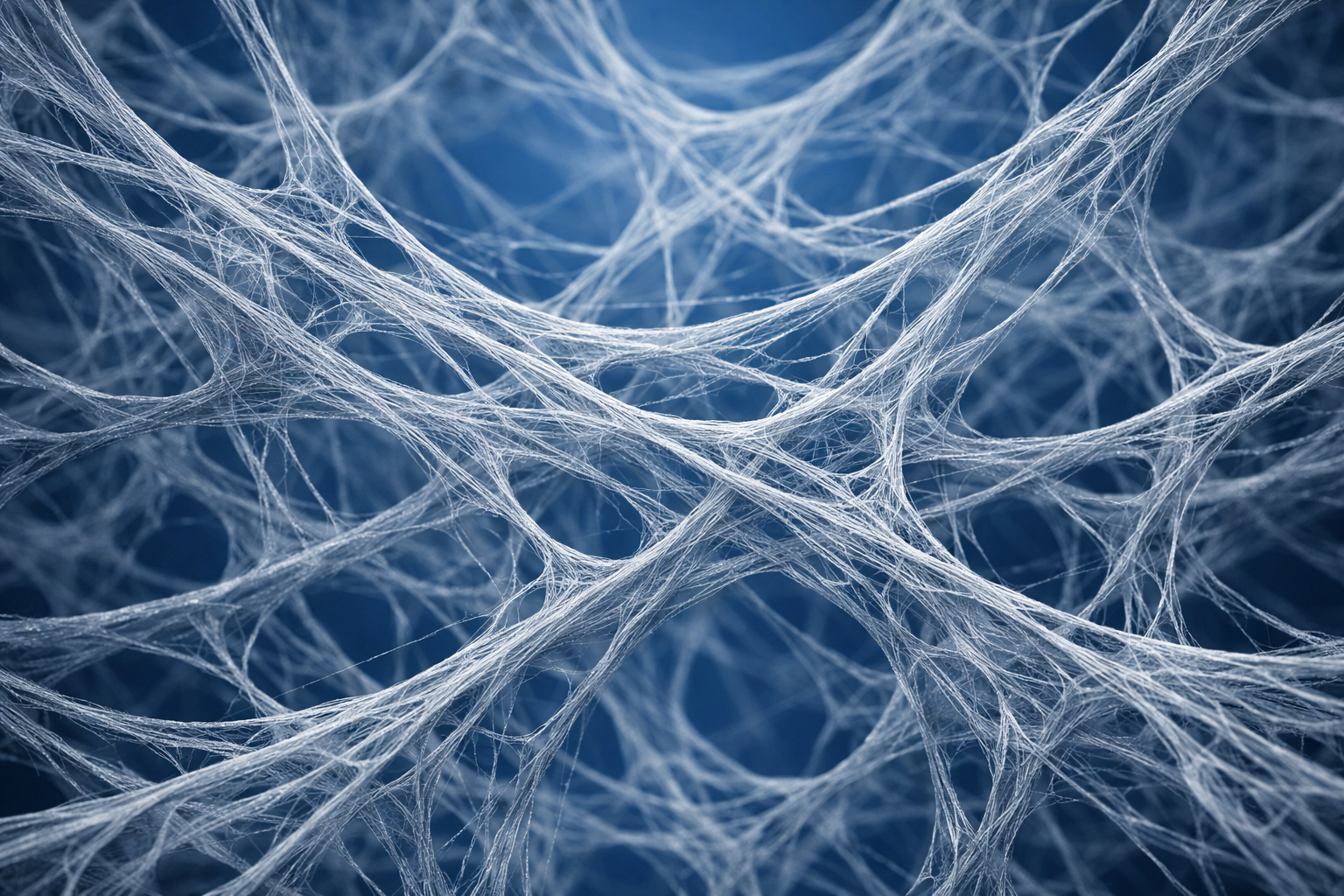
Broad and basic: It is connective tissue that runs throughout your entire body, like one large connective sheet. It wraps around all of your muscles and organs, providing structural support, while also holding many nerves that send signals throughout the body.
It is like a shock absorber, an information super-highway and shapewear for your body, all wrapped into one giant net that covers everything.
Basic Structure and Purpose
Though there are layers, think of fascia as one big intricate 3-dimensional web that wraps around everything inside your body.
The Information superhighway: Fascia is filled with nerves constantly running information throughout your entire body.
The Shock absorber: Fascia is made up of materials that can be gel like, so if there is impact or temperature changes outside of the body, the fascia can soften the impact inside the body.
The shapewear: It wraps around absolutely everything, basically ensuring all your important insides stay where they need to.
The Layers
-
This is the layer of fascia that sits just below your skin.
Filled with nerves, blood vessels and fat- it helps with regulating body temperature, blood circulation and your sensory input (sensory input is big in somatic work!)
This part of the fascia is also what allows your skin to move individually from your muscles and bones, like a layer of lubrication.
-
Surrounds your bones, muscles, arteries, and veins.
This layer is not as mobile, so it provides more solid structure, holding everything together. This is the shapewear ensuring muscles, bones, cartilage and all stay where they should.
It also provides a nice protective cushion
-
Surrounds your internal organs.
Holds each organ in place, but has enough elasticity to allow them to expand and contract (breathing, heartbeat, etc.)
Acts as an insulator and shock absorber to help protect these important organs from damage by temperature or physical trauma.
-
Lines the walls of the body cavity.
Because your body cavity holds nearly all your crucial organs, this is one extra layer of thicker fascia to really ensure organs are protected, supported and able to properly communicate with the rest of the body.
Healthy Fascia
Promoted by proper diet (fascia is mostly collagen, this is part of why collagen is getting extra attention these days) hydration and movement.
Moves and glides easily, allowing muscles and tendons to move while being supported
Promotes proper circulation to muscles for building strength and proper recovery
Assists the lymphatic system in draining waste, improving your immune system
Keeps the nerves in the fascia healthy as well promoting accurate communication to the nervous system about what is happening throughout the body.
Unhealthy Fascia
Can be caused by injury through trauma (like an accident or even surgery) sedentary lifestyle, lack of full body movement.
Does not glide or move with ease
Constricts muscles and tendons, reducing range of motion and circulation
Hinders proper lymphatic drainage, which weakens your immune system
Hinders accurate communication through the nerves - tight fascia can constrict nerves to the point where they either constantly send danger signals or give up sending signals all together.
Where does Somatic work come in?
When fascia softens, the nervous system softens. When the nervous system softens, fascia softens.
It is a two-way street.
Your fascia is filled with nerve endings that constantly send and receive signals to and from your nervous system. If you want to regulate your nervous system, your fascia is going to be involved. This does not mean fascia work alone is going to keep you regulated. It is simply another resource that our magnificent bodies provide, which we can use to improve how we move through life.
How Somatic Work Impacts Fascia
Intentional movement:
Stretching and movement in general is a great way to keep your fascia healthy, which is important for keeping lines of communication open in your body, and proper communication between your mind and body is the entire point of somatic work.
When our muscles are tense from bracing in constant survival mode, our fascia can start to harden in those spots as well, limiting the flow of important fluids and nerve signals. In Somatic work we use many intentional movements that gently remind our bodies how to rest and relax when we can.
Breathwork:
Again, fascia stays healthiest when it is moving. When we do deep breathing, or diaphragmatic breathing, it is stretching and mobilizing fascia around our lungs, diaphragm and pelvis.
We also use breathwork to calm our minds and bodies. In this case we are using the information superhighway inside the fascia to send safety signals throughout the body.
How Fascia Impacts Somatic Work
Fascia is the body’s largest sensory system
Your senses dictate your perception of the world around you, so if your fascia is tight and restricted it will directly impact your sense of safety both physically and emotionally. Tight muscles from constant bracing can tighten fascia, which restricts signal flow throughout the body.
It deeply influences your nervous systems baseline
Fascia is wired into your nervous system, so if your fascia cannot freely assist in moving fluids and nerve signals, that in itself is sending signals to your nervous system that things are not right, and your nervous system will in return send signals to brace for a threat. A vicious cycle that somatic work is great at interrupting.
Healthy hydrated fascia will allow the proper flow of signals between your brain and your body. In somatic work I always talk about keeping the lines of communication open between your mind and body, and your fascia is here to help.